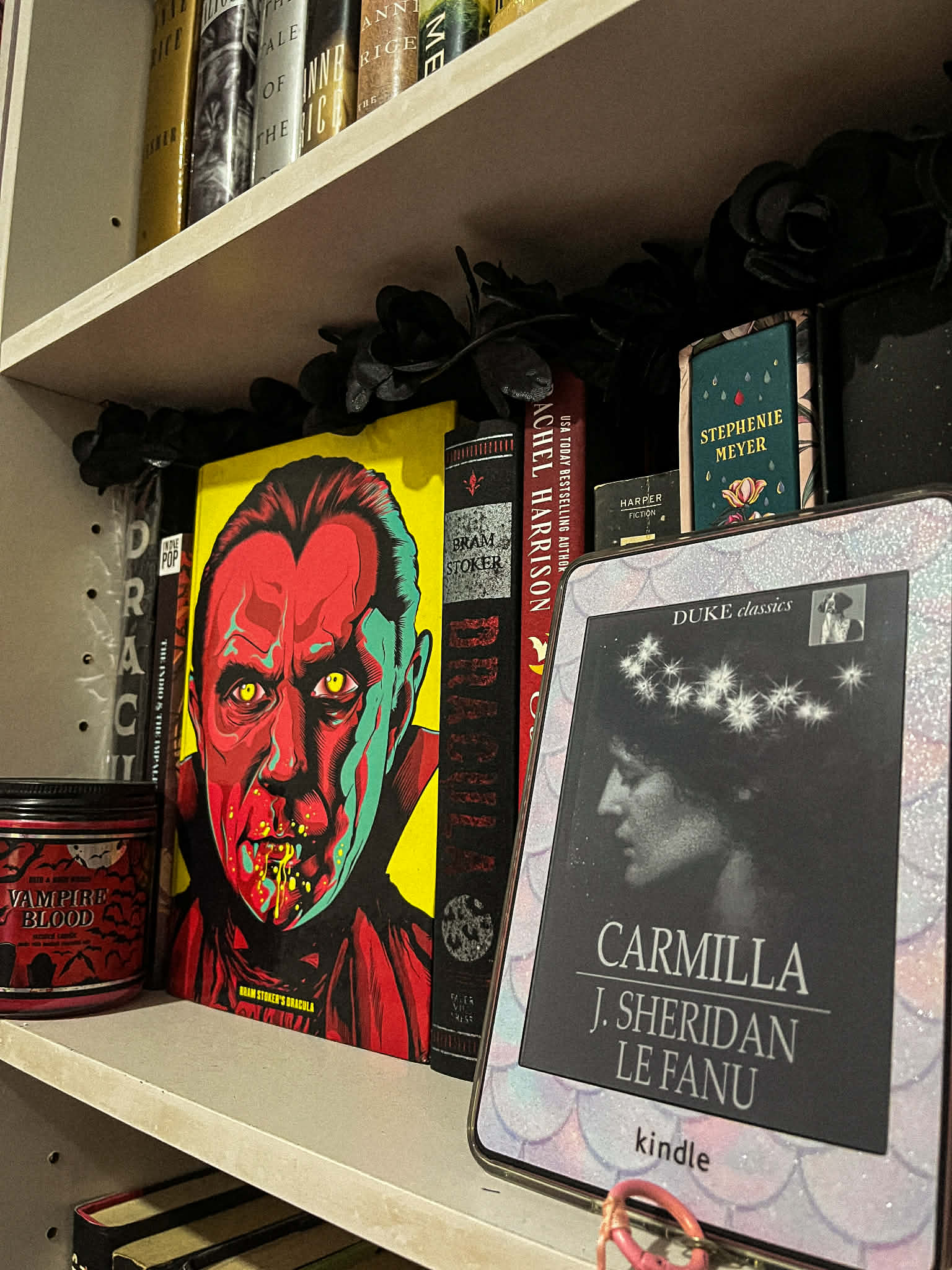
Before Dracula: Reading Carmilla by J. Sheridan Le Fanu
I went into Carmilla knowing it was a classic, knowing it came before Dracula, and knowing it was about vampires—but I didn’t expect it to feel this quietly unsettling. This isn’t a fast-paced, action-heavy vampire story. It moves slowly, deliberately, and relies heavily on atmosphere rather than shock. Once I accepted that and settled into its rhythm, the book started to make a lot more sense to me.
Carmilla is short, but it doesn’t rush. The story unfolds in a way that feels almost dreamy—like something you half-remember after waking up. There’s a constant feeling that something is wrong, but it’s never loud about it. The tension builds through small moments, strange behavior, and lingering unease rather than outright horror. It’s subtle, and I think that’s why it still works.
What really stood out to me is how important this book is to the genre. It predates Dracula and introduced so many vampire tropes we now take for granted—mystery surrounding the visitor, illness, secrecy, obsession, and the blurred line between attraction and danger. On top of that, it’s openly queer for its time, which honestly feels bold even now. The relationship between Carmilla and Laura isn’t just subtext—it’s emotional, intimate, and deeply confusing in a way that feels very intentional.
Carmilla herself isn’t written as a straightforward villain. She’s both predator and tragic figure, which makes her more interesting than just “the monster.” You can feel her loneliness, her hunger, and her pull toward Laura all at once. And Laura isn’t just a passive victim either. She’s emotionally attached, drawn to Carmilla, and clearly affected by her presence. That emotional connection lingered with me more than the horror did.
The writing is moody and restrained. At times, it is slow—but not pointless. The pacing feels intentional, like the book wants you to sit with the discomfort rather than rush through it. It doesn’t spoon-feed answers, and it doesn’t over-explain. You’re meant to feel uncertain, just like Laura does.
I didn’t love it enough to give it five stars, mostly because it’s not the kind of book I’d reread often or recommend to everyone. But I absolutely understand why Carmilla still matters. Its influence on vampire fiction is undeniable, and its emotional layers make it more than just a gothic curiosity.
Overall, Carmilla is eerie, emotionally layered, and quietly unsettling. It’s the kind of story that doesn’t scream—but it stays with you. And for a book written long before modern horror as we know it, that’s pretty impressive.
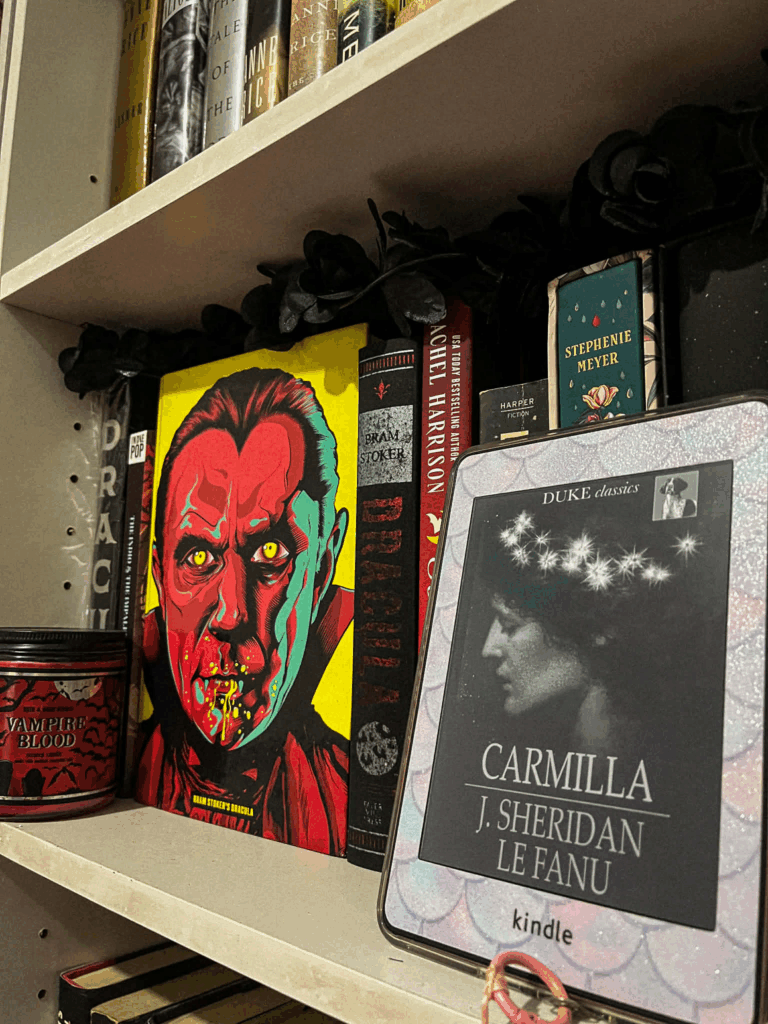
Title: Carmilla
Author: J. Sheridan Le Fanu
Genre: Horror
Subgenre: Classics, Gothic
Page Count: 156 pages
POV: Single
Narrative Style: First person
Series Information: Standalone
Themes and Tropes
- desire and repression
- power, control, and obsession
- loneliness and attachment
- slow-burn dread
- mysterious houseguest
Gore Level: 2/5
Not graphic, but disturbing in implication—illness, blood loss, and death linger in the background.
Spice Level: N/A
No explicit content, but the emotional and romantic undertones are very present.
Profanity: None.
Violence: Yes. Illness, death, and implied sexual violence through vampiric feeding.
Substances: No drugs or alcohol.
Overall Rating: ⭐️⭐️⭐️⭐️
A slow, atmospheric classic that earns its place in vampire history.
Check out this book review on my Bookstagram.
See my bookshelves on Goodreads.

Be the first to comment