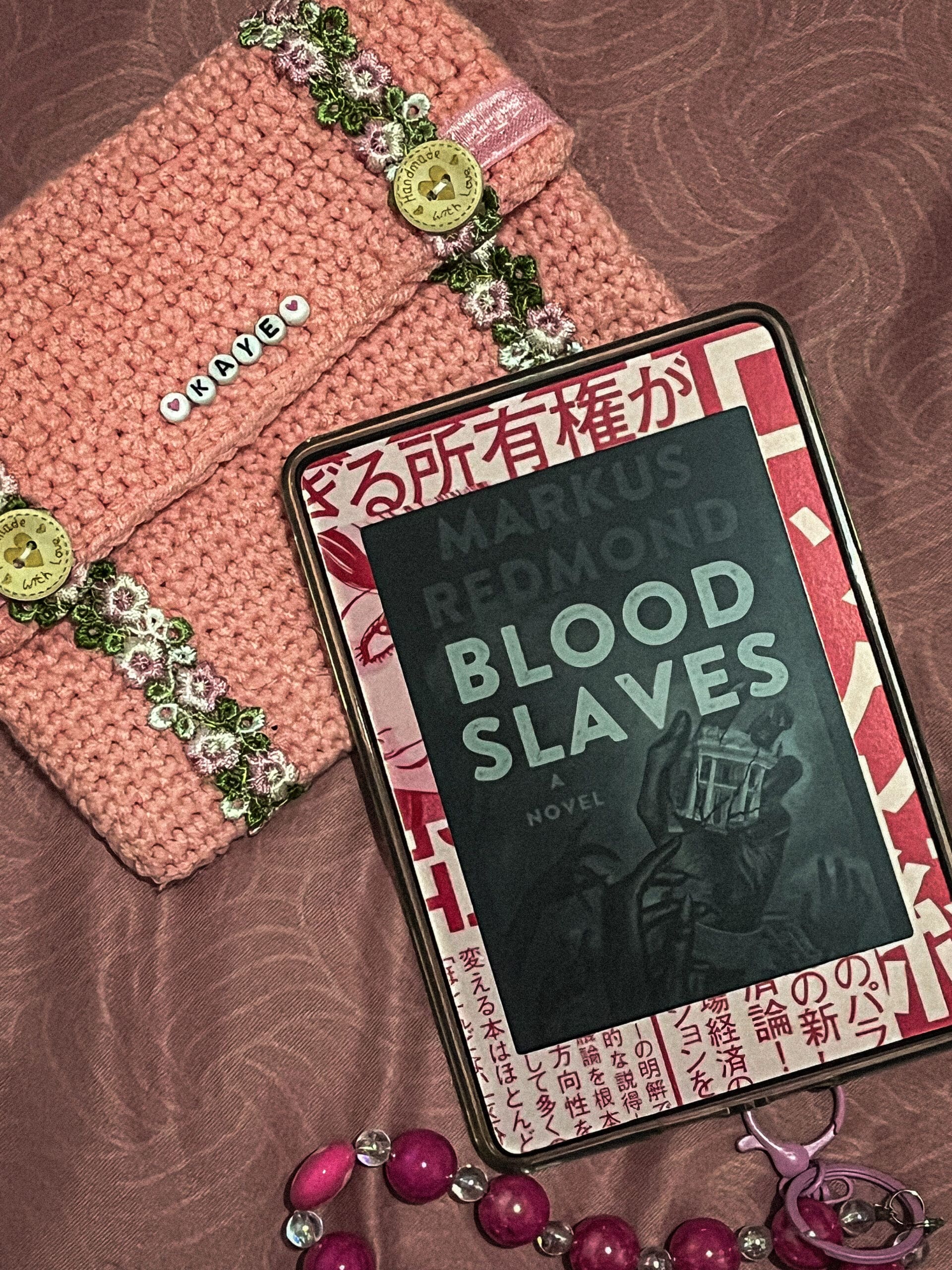
Blood Slaves Review: A Bloody Vampire Story With Sinners Vibes and a Darker History
Blood Slaves Review: My Thoughts
Blood Slaves by Markus Redmond is not your typical vampire story.
Set in 1710 Carolina, the novel combines historical horror, alternate history, African vampire mythology, slavery, revenge, and rebellion. At the center of the story is Willie, an enslaved man desperate to secure freedom for himself, Gertie, and their unborn child. When he encounters Rafazi, the last surviving member of an ancient African vampire tribe, he is offered supernatural power and a chance to fight back.
One thing that immediately stood out to me while reading Blood Slaves was how much it reminded me of Ryan Coogler’s Sinners.
And apparently, I wasn’t imagining the connection. Blood Slaves is specifically marketed for fans of Sinners, and I can absolutely see why.
Blood Slaves Review: What Worked For Me
The biggest thing that worked for me was how different this vampire story feels.
I’ve read plenty of vampire books, but I haven’t come across many that take vampire mythology and place it directly into the history of American slavery. Here, the supernatural elements aren’t simply there to make the story scarier. They’re tied to freedom, oppression, revenge, power, and the question of what happens when people who have been brutally oppressed finally gain the ability to fight back.
The Sinners Connection
This is where I really saw the Sinners connection.
Both stories use supernatural horror to explore Black history, oppression, power, exploitation, and resistance. Sinners uses vampires, blues music, and 1930s Mississippi, while Blood Slaves takes us back to 1710 Carolina and uses vampirism as part of a violent rebellion for liberation.
They’re very different stories, but they explore some surprisingly similar questions.
What happens when the oppressed gain extraordinary power?
And perhaps more importantly:
When does justice become revenge?
I really enjoyed that moral ambiguity.
The Vampire Mythology
I also appreciated the African-inspired vampire mythology. The Ramanga aren’t simply another version of the vampires we’re used to seeing in popular culture. Their history and mythology give the supernatural side of the story something distinctive while connecting the vampires to the larger themes of identity, power, and liberation.
And then there’s the question of who the real monsters are.
The vampires are violent and dangerous, but the human beings inflicting horrific suffering on enslaved people can be far more monstrous. That contrast gives the story another layer beyond the supernatural horror.
Blood Slaves Review: Why It Didn’t Fully Click
This was a four-star read for me, but it wasn’t perfect.
The beginning can feel a little slow as the story establishes the characters, historical setting, and vampire mythology. There’s quite a bit to take in, and the book asks you to spend some time with the world before everything really starts coming together.
There are also moments when the exposition and lore felt heavier than I would have preferred.
But once the story gains momentum, the combination of historical horror, supernatural violence, and rebellion becomes much more compelling.
I also think the subject matter itself can make this a difficult book to read. The depictions of slavery, racism, abuse, torture, and sexual violence are central to the story and can be much more disturbing than the gore itself.
Final Thoughts on Blood Slaves
Blood Slaves gave me something I wasn’t expecting from a vampire novel: a story where the supernatural horror actually works alongside the historical horror instead of simply sitting on top of it.
The Sinners comparison kept coming to mind throughout the book, and I think fans of that movie will understand why. Both stories use supernatural horror to examine Black history, oppression, power, exploitation, and resistance, even though they do so in very different settings and ways.
I also enjoyed the moral ambiguity. The book doesn’t make the question of good versus evil particularly simple. The vampires are monsters, but the human beings committing horrific acts against enslaved people are often far more monstrous.
This definitely isn’t a light vampire read, but for me, the gore itself wasn’t what made it difficult. I’ve read much more extreme horror and splatterpunk. The harder part was the historical violence and the depiction of slavery, racism, torture, sexual violence, and dehumanization.
Overall, I appreciated how different this was from the usual vampire story.
Book Information
Title: Blood Slaves
Author: Markus Redmond
Genre: Horror
Subgenre: Historical Horror, Supernatural Horror, Alternate History, Vampire Fiction
Page Count: 432 pages
POV: Multiple
Narrative Style: First Person
Series Information: Book 1 of the Blood Saga series
Themes and Tropes
- slavery and oppression
- revenge and justice
- vampire mythology
- supernatural rebellion
- good vs. evil
Top 3 Highlights
The Sinners connection. The combination of Black history, supernatural horror, vampires, oppression, power, and revenge immediately reminded me of Sinners. The stories are very different, but both use horror to explore ideas much bigger than the monsters themselves.
The vampire mythology. I really enjoyed the African-inspired mythology behind the Ramanga. It gave the vampire elements something different from the usual vampire lore and made the supernatural side of the story feel more distinctive.
The moral complexity. The book constantly makes you question who the real monsters are. The vampires are violent and terrifying, but the human beings inflicting horrific suffering on enslaved people can be even more monstrous.
Gore Level: 3/5
Bloody and sometimes graphic, with vampire attacks, mutilation, violent deaths, and gruesome imagery, but relatively moderate compared with extreme splatterpunk.
Spice Level: 2/5
Some sexual content is present, but romance and spice are not the focus of the story.
Profanity: Frequent strong language and racial slurs consistent with the historical setting.
Violence: Extremely brutal, including slavery-related physical abuse, torture, murder, sexual violence, executions, and violent rebellion.
Substances: Some references to alcohol and substance use.
Who Should Read Blood Slaves?
I’d recommend Blood Slaves to readers who enjoy historical and supernatural horror, especially those who like vampire fiction with a darker twist. If you enjoy alternate history, African-inspired mythology, supernatural revenge stories, and horror that explores themes of liberation, resistance, oppression, and power, there’s a lot here to appreciate. It’s also a good choice for readers who don’t mind their horror being violent and bloody and who enjoy stories that use supernatural elements to explore bigger social issues.
And if you enjoyed Sinners, I think Blood Slaves is especially worth checking out. The stories are very different, but both use supernatural horror to explore Black history, oppression, power, exploitation, and resistance. If that combination of horror and social commentary is what drew you to Sinners, you may find a lot to enjoy here.
Overall Rating: ⭐️⭐️⭐️⭐️
A bloody, disturbing, and unconventional vampire story that blends historical horror with revenge, liberation, and supernatural power.
Blood Slaves is a brutal and unconventional vampire story that combines historical horror with supernatural mythology, revenge, and rebellion.
The thing that really stood out to me was how much it reminded me of Sinners. The two stories aren’t the same, but they share that fascinating approach of using vampires and supernatural horror to explore Black history, oppression, power, exploitation, and resistance.
And that comparison isn’t surprising, since Blood Slaves is specifically marketed for fans of Sinners.
Who Are The Real Monsters?
What I enjoyed most was the moral ambiguity. The vampires are obviously monsters, but the book makes you look at the human beings committing horrific acts against enslaved people and ask who the real monsters are.
This is also a very difficult book in terms of subject matter. The gore is bloody but, compared with the extreme horror and splatterpunk I’ve read, I wouldn’t consider it extreme. What makes this story much harder is the historical violence, racism, torture, sexual violence, and dehumanization.
Still, if you’re looking for something different from the usual vampire story, Blood Slaves definitely delivers.
Check out this book review on my Bookstagram.
 Blood Slaves by Markus Redmond
My rating: 4 of 5 stars
lood Slaves is not your typical vampire story.
This is historical horror, alternate history, vampire mythology, slavery, revenge, and rebellion all wrapped into one very bloody book.
And while reading it, I kept thinking about Ryan Coogler’s Sinners. The stories are very different, but both use supernatural horror to explore Black history, oppression, power, exploitation, and resistance. It also makes sense because Blood Slaves is specifically marketed for fans of Sinners.
I really enjoyed the African-inspired vampire mythology and the way the supernatural elements were connected to the story’s larger themes. This isn’t a vampire story where the vampires are simply there to be scary. The book uses them to explore freedom, revenge, and what happens when people who have been brutally oppressed finally gain the power to fight back.
And then there’s the question of who the real monsters are.
The vampires are violent and dangerous, but the human beings committing horrific acts against enslaved people are often far more monstrous.
That moral ambiguity was one of my favorite aspects of the story.
This is also a very difficult book in terms of subject matter. I’ve read much more extreme horror and splatterpunk, so I wouldn’t consider the gore itself extreme. The harder part was the historical violence, including racism, torture, sexual violence, and dehumanization.
Overall, I really appreciated how different this was from the usual vampire story.
Bloody, disturbing, and a fascinating reinvention of vampire horror.
View all my reviews on Goodreads.
More Reviews You Might Enjoy
If you liked this review, check out:
The September House by Carissa Orlando

Be the first to comment